Polyester color masterbatch procurement: Can withstand high temperatures, and thus can stand the test.
Polyester color masterbatch procurement: Can withstand high temperatures, and thus can stand the test.
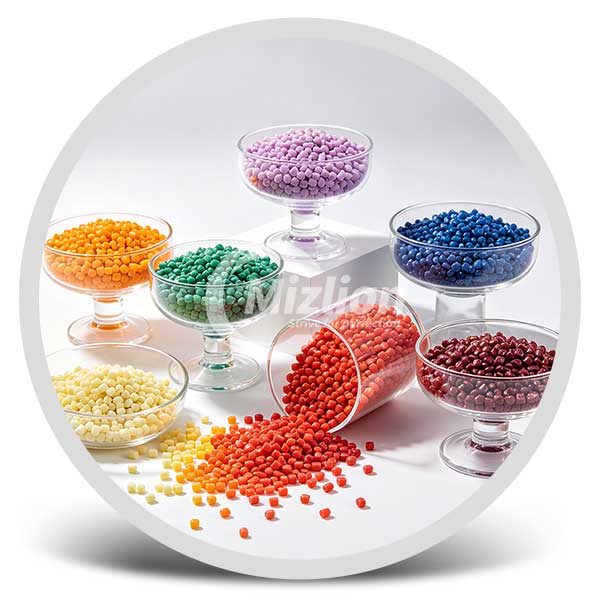
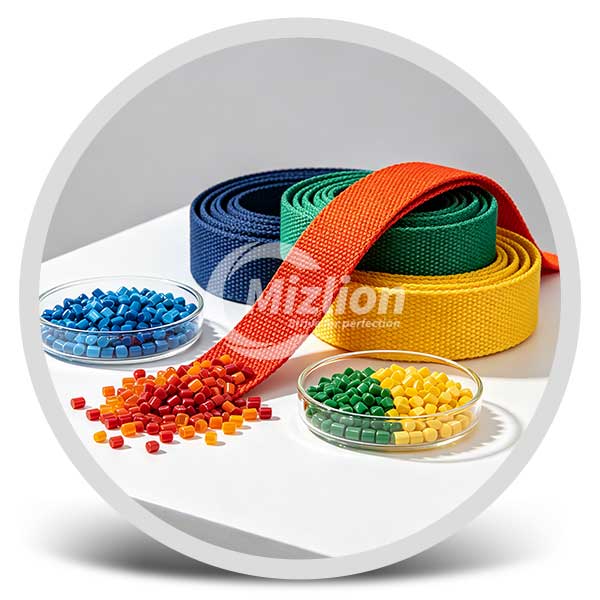
Polyester color masterbates are used for coloring polyester filament, staple fiber, non-woven fabric and other products. The spinning temperature of polyester is relatively high (usually ranging from 280℃ to 300℃), and the requirements for the heat resistance, dispersion and carrier compatibility of the color masterbates are more stringent than those of polypropylene. Below, from the production perspective, we will introduce how we control these aspects.
I. Temperature Resistance and Dispersion: The "Stability" Strategy under High Temperatures
The core of polyester color masterbatch lies in the temperature resistance of the pigment, the selection of the carrier, and the reasonable combination of the dispersion system.
Pigment selection: The spinning temperature of polyester fibers is relatively high, so we need to choose pigments that are stable, do not decompose, and do not migrate within this temperature range. We will select appropriate temperature-resistant grades for different color series (especially light colors and fluorescent colors) to avoid color differences caused by pigment thermal decomposition or the generation of air wrinkles during the spinning process. For color masterbatches used in outdoor polyester products, special attention should also be paid to the pigment's light fastness.
Carrier matching: Based on the customer's polyester substrate (such as PET) and spinning process (FDY, POY, staple fibers, etc.), select carrier resins with matching fluidity to ensure good compatibility with the substrate. Inconsistency between the carrier and the substrate can lead to spinning breakage, the formation of gel particles, or a reduction in fiber strength. For masterbatches used in high-speed spinning, the melt index of the carrier must match the spinning speed.
Nanometer-level grinding technology: We employ a wet grinding process to finely grind the pigments to the nanometer scale, and combine it with an ultradispersant coating to ensure a more uniform distribution of the pigments in the carrier. This helps to reduce the increase in filtration pressure and the formation of crystalline points during the spinning process, and is particularly suitable for fine-denier yarns and high-speed spinning scenarios.
II. Process Control and Batch Management
Polyester color masterbatch is most prone to issues such as color spots, color differences or batch instability. In our production process, we pay attention to the following aspects:
Double screw mixing and filtration: Use the appropriate screw combination and processing temperature to ensure that the pigments are fully depolymerized. During the production process, equip with appropriate mesh size filter screens to remove possible agglomerated particles or impurities, reducing the risk of clogging the filter screen and the generation of crystalline points in the spinning process.
Color difference control: Before each batch of production, a small sample is made first. The sample is then pressed into a sheet or blown into a film under the simulated polyester spinning temperature, and compared with the standard sample in terms of color and dispersion effect. During the production process, samples are taken at regular intervals for color difference testing to ensure that the color of each batch is within the allowable tolerance range. For customers with higher requirements, the color plates of multiple consecutive batches can be retained for review.
Batch retention samples and traceability: Samples and color charts are retained for each batch of products, with the production date and process parameters marked. Before the next batch of production, the color, dispersion effect and filtration performance of the retained samples from the previous batch will be compared to ensure there are no significant changes.
Summary and Selection Suggestions
When purchasing polyester color masterbatch, it is recommended to follow the following steps for confirmation:
Specify the process and substrate: whether it is polyester FDY, POY, short fibers or non-woven fabric? The spinning temperature, speed, and filtration accuracy, so as to match the appropriate temperature resistance grade and carrier.
Provide color palettes and samples: Run the machine for proofing, observe the color accuracy, check for any color spots or crystal points, as well as the breakage rate of the spun fibers and the changes in filtration pressure.
Confirm batch stability: The supplier is required to provide recent data on color swatches comparison and filtration performance for multiple batches.
Jiangsu Meizilin Nano Technology Co., Ltd. adopts nano grinding technology and focuses on coloring and functional masterbatches for polyester, nylon, polypropylene, polyethylene, PLA and other substrates. It can provide polyester color masterbatch technical solutions. Welcome to request samples for testing.
Official website: http://www.mizlion.cn
Contact person: Mr. Ni Mobile phone: 13805103263
Telephone: 0515-88322183
Email: risen@risencolor.com
Address: No. 1, Honghua Road, Southeast Industrial Park, Yantong Town, Yancheng City, Jiangsu Province