Three key dimensions for quality control of nylon masterbatch
Three key dimensions for quality control of nylon masterbatch
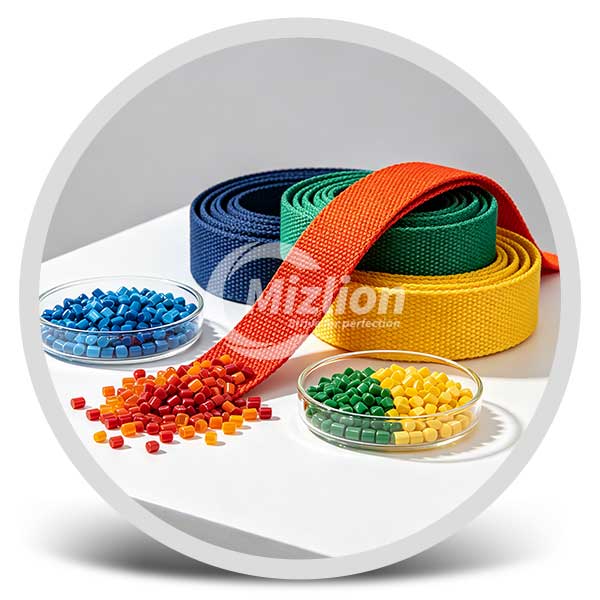
Nylon masterbatch is used for coloring nylon filament, staple fiber, non-woven fabric and other products. The spinning temperature of nylon is high and it is sensitive to moisture. The heat resistance, dispersibility and carrier matching degree of color masterbatches are more strictly required than those of polypropylene. As a purchaser, what you care about is not only the accuracy of the color, but also the smoothness of the spinning process on the machine and the stability of the batch. From a production perspective, the following introduces how we control these several links.
I. Carrier Matching and Temperature Resistance
Nylon is classified into different grades such as PA6 and PA66. Their melting points and processing temperatures vary, and so do the requirements for the carrier and temperature resistance of color masterbatches.
Carrier matching: We select the corresponding carrier resin based on your nylon substrate (such as PA6 masterbatch for PA6 spinning) to ensure good compatibility. Inconsistency between the carrier and the substrate can lead to spinning breaks, the generation of gel particles or a reduction in fiber strength. Meizhi Lin mainly deals in coloring and functional masterbatches for four major material systems: PP, PET, PA, and PLA, and has the ability to match them specifically.
Pigment temperature resistance screening: The spinning temperature of nylon is usually between 260℃ and 300℃. We select pigment varieties that are stable, do not decompose, and do not migrate within this temperature range. We screen the appropriate temperature resistance grades for different color series (especially light colors and fluorescent colors) to avoid color differences or gas streks caused by the thermal decomposition of pigments.
Moisture control: Nylon is sensitive to moisture. The color masterbatch needs to maintain a low moisture content before spinning. We reduce spinning breaks and bubbles caused by moisture brought in by masterbatches through drying treatment or by using carriers with low water absorption rates.
Ii. Uniformity of dispersion and Filtration Performance
The filtration accuracy of the nylon spinning assembly is relatively high. If there are agglomerated particles or impurities in the color masterbatch, it is easy to cause screen clogging, pressure increase or color spots.
Nanoscale grinding technology: We adopt a wet grinding process to refine the pigments to the nanometer level and combine it with a super-dispersant coating to make the pigment distribution more uniform in the carrier, which helps to reduce the increase in filtration pressure and the formation of crystal points during the spinning process. Meizhilin focuses on the core technology of nano-wet grinding and super-dispersion, and its products are suitable for the entire industrial chain scenarios such as melt direct spinning, filament, and non-woven fabric.
Filtration and particle size detection: Multiple layers of filter screens are equipped during the production process to remove possible agglomerated particles or impurities. The particle size distribution of pigments in the masterbatch was detected by a laser particle size analyzer to ensure that the proportion of large particles was controlled within a reasonable range.
Batch sample retention and comparison: Samples and color plates are retained for each batch of color masterbatches. During the production of the next batch, color, dispersion effect and filtration pressure simulation tests will be conducted and compared with the samples of the previous batch to ensure the stability between batches.
Summary and selection suggestions
When purchasing nylon masterbatch, it is recommended to confirm according to the following steps:
Clarify the nylon grade and process: PA6 or PA66? Spinning temperature, speed and filtration accuracy, so as to match the appropriate carrier and temperature resistance grade.
Provide color palettes and small samples: make samples on the machine, observe the color accuracy, the presence of colorless or crystal points, as well as the spinning break rate and changes in filtration pressure.
Confirm moisture content and batch stability: Request the supplier to provide the moisture content test data of the masterbatch and the comparison of color plates from multiple recent batches.
Jiangsu Mizlion Nano Technology Co., Ltd adopts nano-grinding technology and focuses on coloring and functional masterbatches for substrates such as polyester, nylon, polypropylene, polyethylene, and PLA. We can provide technical solutions for nylon color masterbatches. Welcome to request samples for testing.
Official website: http://www.mizlion.com/