Why is the carrier of nylon color masterbatch so crucial? How to choose between PA6 and PA66?
Why is the carrier of nylon color masterbatch so crucial? How to choose between PA6 and PA66?
The core role of the carrier
The carrier is the basic framework of nylon color masterbatch and is also the key factor determining the compatibility between the color masterbatch and the base material. Pigments, various additives are dispersed in the carrier resin. During processing, the carrier and nylon base material melt and fuse, driving the pigments to be uniformly dispersed within the melt. If the carrier and the base material do not match, problems such as pigment agglomeration, uneven coloring, surface spots may occur. It will also affect the stability of spinning and injection molding, increasing the risk of breakage and segregation. Moreover, the carrier will also affect the processing fluidity and heat resistance stability. The processing temperature range of nylon is relatively narrow, and the carrier needs to be adapted to the corresponding melting characteristics to ensure synchronous melting with the base material and avoid premature decomposition or delayed melting. An inappropriate carrier is prone to degradation under high-temperature processing, resulting in color deviation, mechanical performance decline, and even odor production. At the same time, the carrier will also affect the migration resistance and color fastness of the finished product.
Selection of carriers for PA6 and PA66
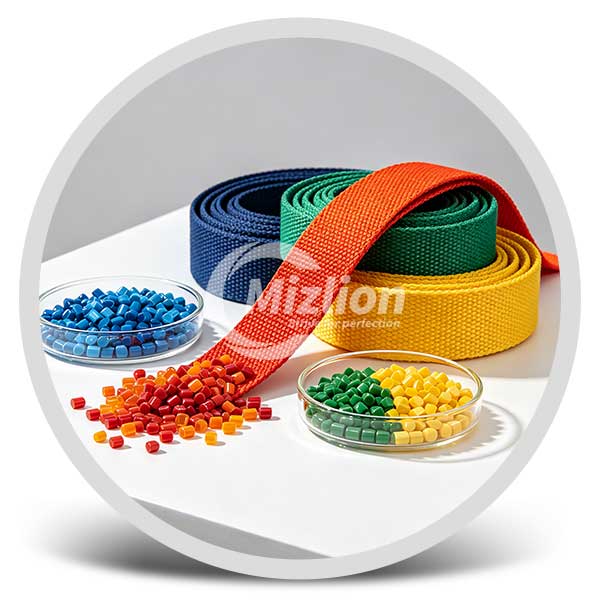
PA6 carrier color masterbatch, suitable for PA6 base material. It has a lower melting temperature, a wider processing window, good melt flowability, and low dispersion difficulty, making it suitable for scenarios requiring high melt flowability such as spinning, thin-wall injection molding, etc. It is widely used in daily spinning, ordinary belts, and conventional injection molding products, with better processing tolerance.
PA66 carrier color masterbatch, specifically matching PA66 base material. PA66 itself has higher heat resistance, and the corresponding carrier resin has stronger heat resistance, capable of withstanding higher processing temperatures. It is not prone to decomposition under high-temperature conditions and is suitable for long-term heat-resistant products. However, it requires stricter control of processing temperature, a narrower processing window, and higher requirements for equipment temperature control and shear conditions.
The carriers of the two cannot be randomly mixed and used interchangeably. Adding PA6 carrier color masterbatch to the PA66 system will lead to decomposition of the carrier at high temperatures, resulting in color differences and pores; conversely, using PA66 carrier for PA6 will cause inconsistent melting, poor dispersion, and easy production of defects.
The selection should prioritize matching the base material brand, combined with processing technology, and the heat resistance requirements of the finished product for comprehensive judgment. Before production, it is recommended to conduct sample trial production to confirm the coloring effect and processing stability.
If you need sample consultation, please feel free to contact us.